
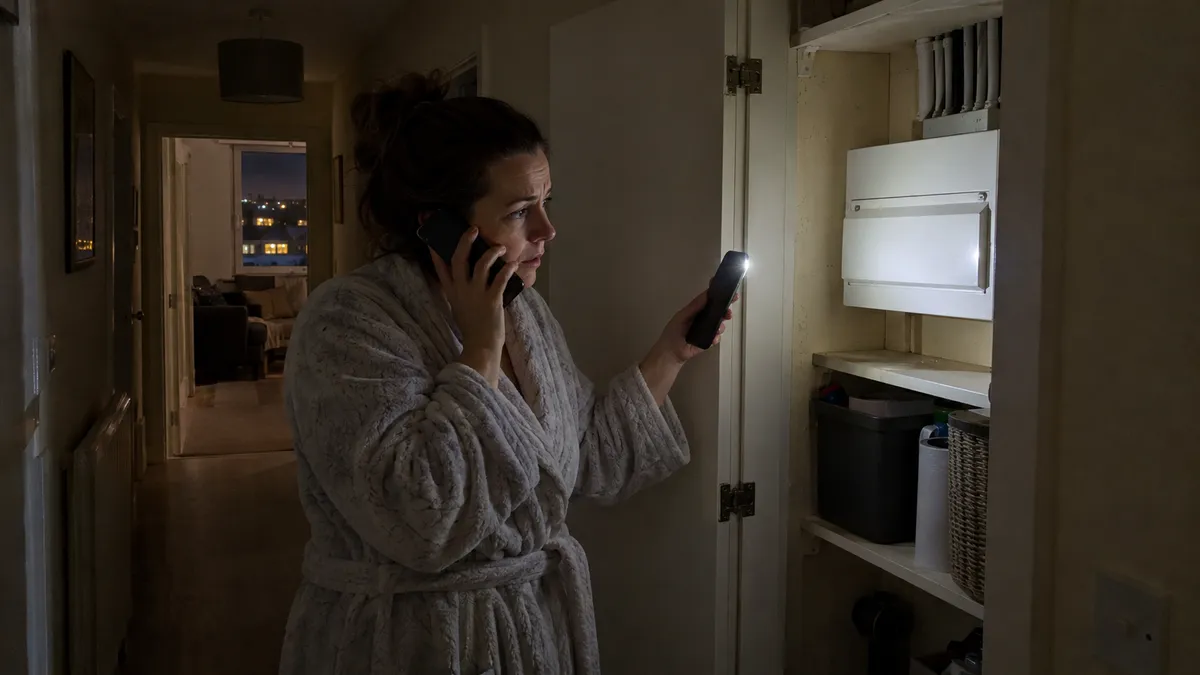
You flick a switch and nothing happens. Or you catch a faint burning smell near a socket. Is it something you can leave until morning, or do you need help right now? It's not always obvious. Some electrical faults look minor but put your home and family at real risk. Others aren't urgent at all. Knowing the difference can save you money, stress and possibly far worse. Here's how you can tell.
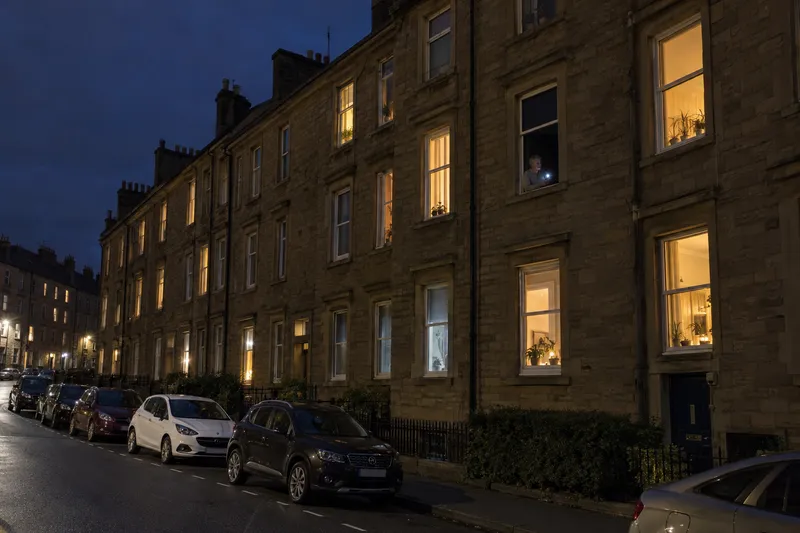
Losing power to the whole house or part of it
When the lights go out across your whole house, check whether your neighbours have lost power too. If their homes are dark, it's a network fault, so call 105 to report it and get updates. If only your house is affected, look at your consumer unit.
A tripped main switch or RCD often means a faulty appliance or circuit. Unplug everything, then reset the switch. If it trips again straight away, you've got a fault that needs an electrician.
Losing power to part of the house works the same way. Find the tripped breaker and reset it once.
Don't keep forcing it on. If you smell burning, see scorch marks or hear buzzing from the board, leave it off and call an emergency electrician.
A trip switch that won't reset or keeps tripping
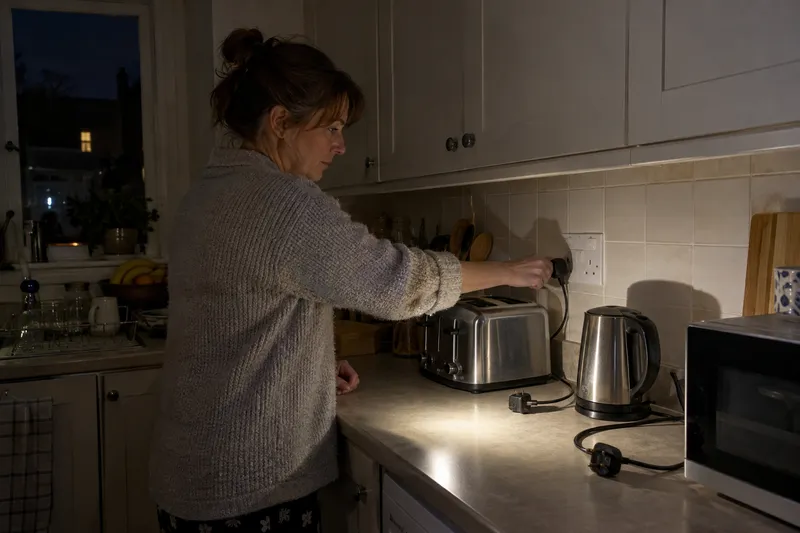
A trip switch that won't stay up is telling you something's wrong, so don't fight it. Holding it up or taping it in place risks fire and electric shock. Instead, switch off and unplug everything on that circuit, then reset the switch.
If it holds, plug appliances back in one at a time until it trips again to find the faulty one. If it still trips with nothing connected, the fault's in your wiring, and you need an electrician.
Daytime visits (Monday to Saturday, 8am to 6pm) cost £50 an hour, with a £100 minimum. Evenings cost £150 including the first hour, and overnight, Sunday or bank holiday call-outs cost £195, with parts agreed first. You'll pay a £50 deposit first for out-of-hours visits.
A burning smell from a socket, switch or fuse box
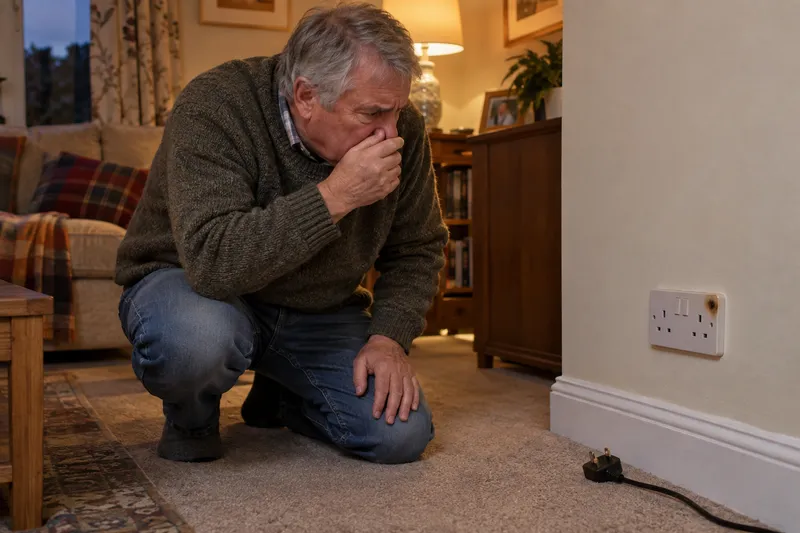
If you smell burning from a socket, switch or fuse box, treat it as an emergency, because overheating wiring can start a fire behind your walls before you see any smoke.
Switch off the power at the main switch if you can reach it safely, and stop using any appliance plugged into the affected socket. Don't touch anything that feels hot or looks scorched. If you see smoke or flames, leave the property and call 999.
Otherwise, call an emergency electrician immediately rather than waiting until morning. During the day, there's no call-out fee. Evenings cost £150 including the first hour, and overnight, Sunday or bank holiday visits cost £195.
Both need a £50 deposit that comes off your bill. You'll agree parts first.
Sparking, buzzing or scorch marks on fittings
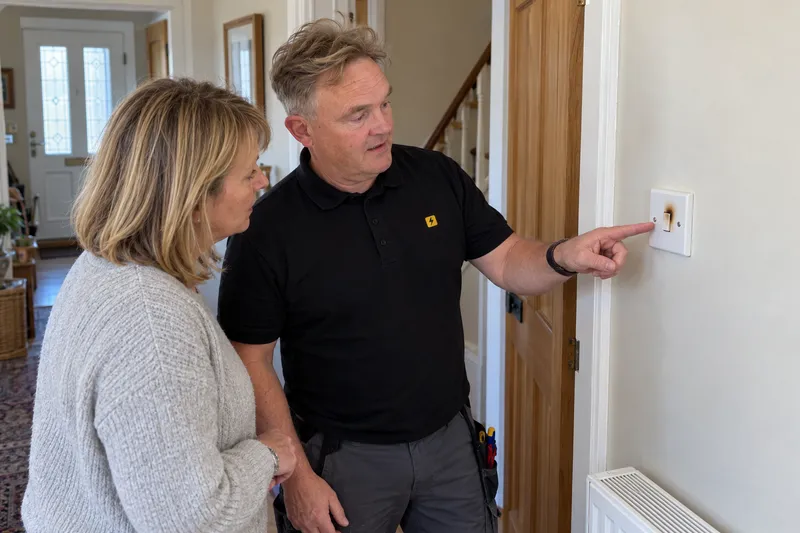
Sparking, buzzing or scorch marks on a socket, switch or light fitting usually mean electricity is arcing across loose or damaged wiring, so treat it as an emergency even if the fitting still works. Arcing produces intense heat that can ignite dust, plastic or the wall behind, and it often gets worse without warning. Don't touch the fitting or try to unscrew it.
Switch off the circuit at the fuse box, or turn off the main switch if you're not sure which circuit it's on, then keep everyone away from it. Call an emergency electrician straight away. In the day, you'll pay no call-out fee, £50 an hour with a £100 minimum.
After 6pm, you'll pay a £50 deposit that comes off your bill.
Water leaking near electrics or into light fittings
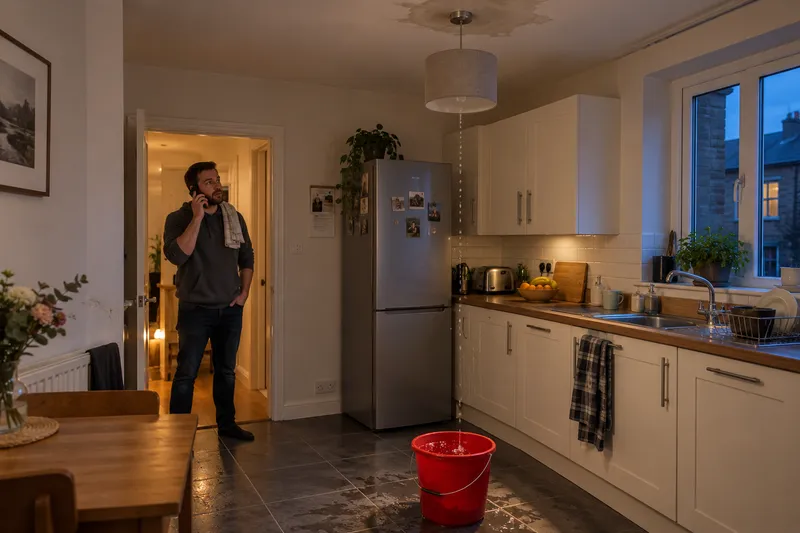
When water drips near sockets or seeps into a light fitting, treat it as an emergency, because water conducts electricity and can cause shocks, short circuits or a fire. Don't touch wet switches, sockets or fittings.
If you can reach your consumer unit safely without standing in water, switch off the main supply. Then stop the leak at its source, or turn off your stopcock.
Call an emergency electrician once the area's safe. During the day, Monday to Saturday from 8am to 6pm, you won't pay a call-out fee, just £50 an hour with a £100 minimum. Evening call-outs cost £150 including the first hour.
Overnight, Sunday and bank holiday visits cost £195 including the first hour. Parts are extra, and you'll agree them first.

Exposed or damaged wiring
Exposed or damaged wiring can give you a serious shock or start a fire, so treat bare copper, cracked insulation, scorch marks or a burning smell as an emergency. Don't touch the wires or try taping them up yourself. If it's safe, switch off the circuit at your consumer unit, keep children and pets away, and call an electrician.
What you'll pay depends on when you call. In the day (Monday to Saturday, 8am to 6pm), there's no call-out fee: you pay £50 an hour, with a £100 minimum covering two hours.
Evenings cost £150 and overnight, Sunday or bank holiday call-outs cost £195, both including the first hour. For these, you'll pay a £50 deposit, deducted from your bill, and agree parts first.
Losing heating or hot water because of an electrical fault
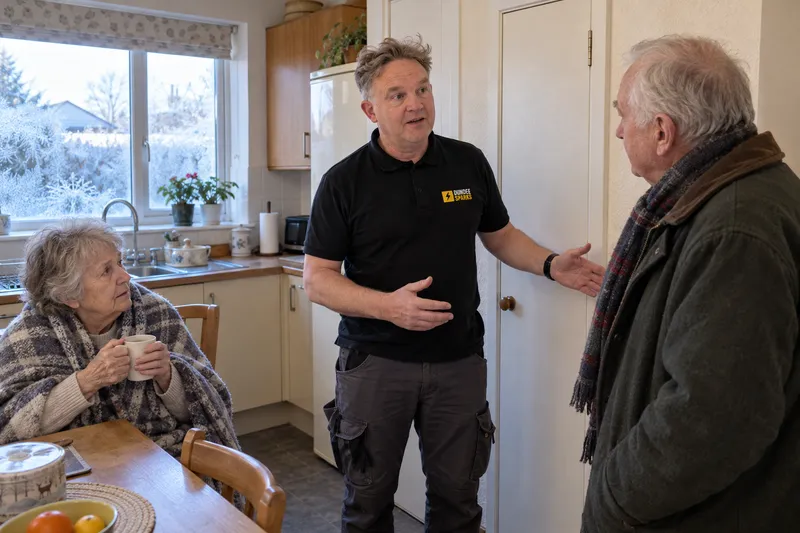
If your boiler, immersion heater or electric shower suddenly stops working, an electrical fault could be the cause, especially if a breaker has tripped or a fuse has blown. Losing heat or hot water isn't always an emergency, but it becomes one when vulnerable people, young children or elderly relatives are at home, or when temperatures drop sharply. Don't keep resetting a breaker that trips again, and never open the boiler's casing yourself.
An emergency electrician in Dundee can diagnose the fault and restore power safely and quickly. Daytime visits have no call-out fee, while evening call-outs cost £150 including the first hour.
Overnight, Sunday and bank holiday call-outs cost £195. Both require a £50 deposit by secure text link, which comes off your bill.

24/7 Emergency Electrician Dundee is a local emergency electrical service run by James Leslie
Who picks up when you ring 24/7 Emergency Electrician Dundee at 3am? James Leslie does, not an answering service. He runs this local emergency service from Castlecroft Business Centre in east Dundee, as part of Dundee Sparks.
James is a former RAF electrical engineer with 40 years' experience. He holds the 18th Edition (BS 7671) and City & Guilds 2382-22, and he's fully insured. As a former retained firefighter, he knows what electrical fires look like.
When you call 01382 721486, he'll come out for power loss, a tripping consumer unit, burning smells or water in your electrics. He makes the fault safe, explains what went wrong and agrees repair costs before starting. He covers Dundee, Broughty Ferry, Carnoustie, Newport-on-Tay and nearby areas, and he's rated 5/5 on Google.
Conclusion
If you notice burning smells, sparks, buzzing, scorch marks, exposed wires, water near fittings or a breaker that won't stay on, treat it as an emergency. Switch off the power only if it's safe, and don't touch wet or damaged equipment. If you see smoke or fire, get out and call 999.
For a network-wide power cut, call 105. For a fault in your home, call our 24/7 emergency line on 01382 721486. Charges vary by time and service.