
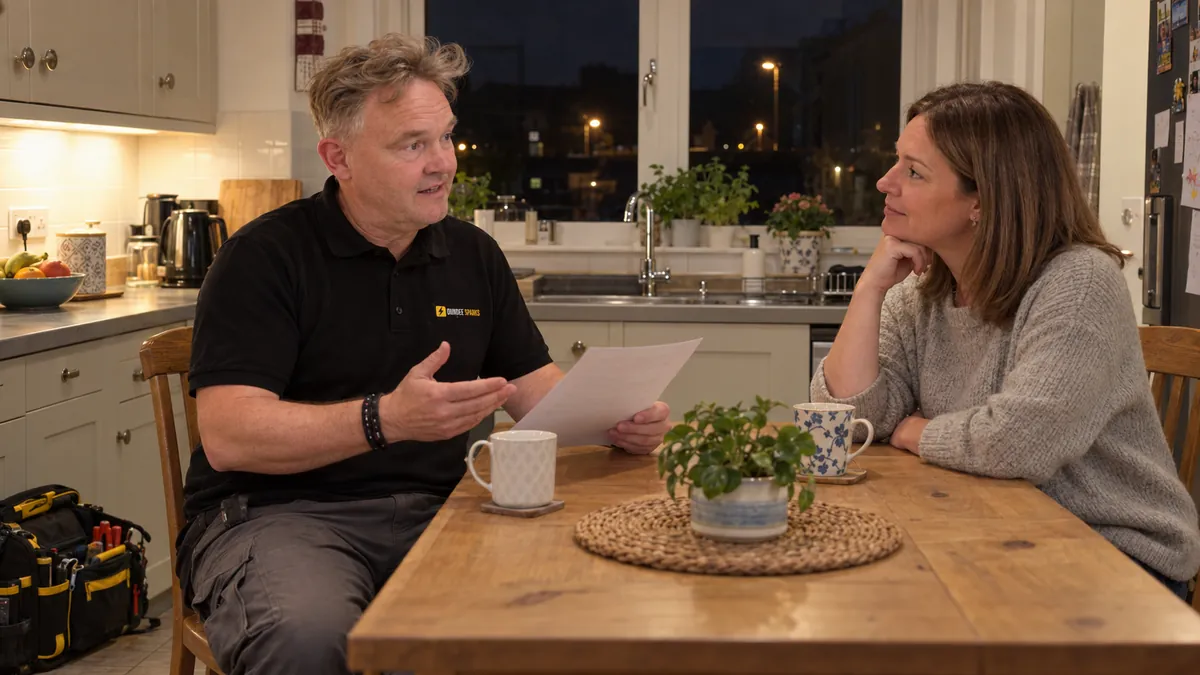
When your power cuts out or a socket starts sparking, you'll want an electrician fast. But you'll also want to know what it'll cost before anyone arrives. In Dundee, the price you pay depends on when you call and how long the job takes. A midday fault and a midnight one can mean very different bills. Here's what you'll likely pay, and how you can avoid paying more than you need to.
| DaytimeMon–Sat, 8am–6pm | EveningMon–Sat, 6pm–10pm | Overnight & Sundays10pm–8am, Sun, bank holidays | |
|---|---|---|---|
| Call-out fee | £0 | £150, includes the first hour | £195, includes the first hour |
| Minimum charge | £100 (covers 2 hours) | £150 | £195 |
| Each extra 30 minutes | £25 | £45 | £50 |
| Deposit before setting off | None | £50 by text link | £50 by text link |
| Cancel after James sets off | £0 | £50 (deposit kept) | £75 (deposit + £25) |
| Parts | Extra, agreed first | Extra, agreed first | Extra, agreed first |
| VAT | None | None | None |
Live prices and the full cancellation terms are on the emergency electrician Dundee price list.

Daytime emergency call-outs cost a minimum of £100 for two hours
Most Dundee electricians charge a minimum of £100 for a daytime emergency call-out, and that fee usually covers the first two hours of labour. If your electrician fixes the fault in 30 minutes, you'll still pay the full £100. Once the job runs past two hours, most firms bill each extra 30 minutes at £25. Daytime rates typically apply between 8am and 6pm, Monday to Saturday. Call outside these hours and you'll face higher charges.
The minimum fee covers the electrician's travel and labour, but it doesn't include parts. If you need a new socket, fuse or consumer unit, you'll pay for those materials separately. Before you book, ask for the hourly rate after the minimum period and confirm whether the quote includes VAT.
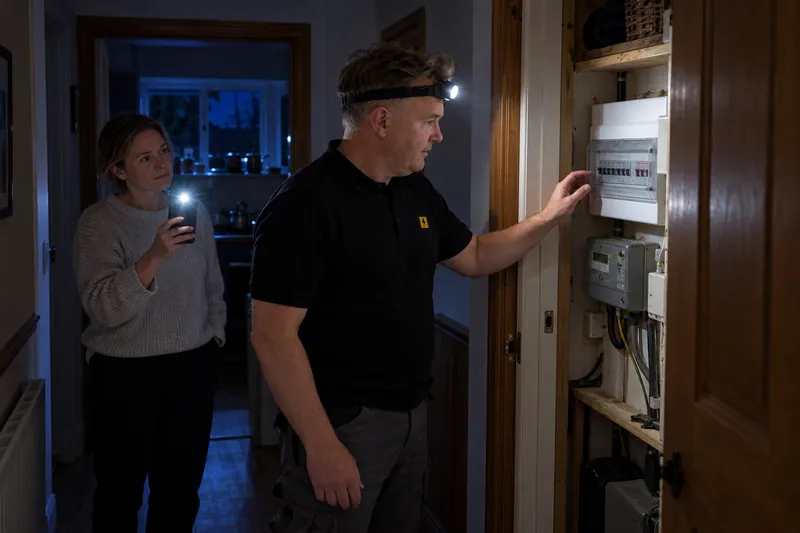
Evening rates start at £150, which includes the first hour on site
Evening call-outs in Dundee start at £150, and that fee covers only the first hour on site. You'll pay more than daytime rates because electricians work outside normal hours. If the job runs past the first hour, you'll pay £45 for each extra 30 minutes. The fee doesn't include parts and materials, so budget for those separately. To keep costs down, describe the fault clearly when you call, so the electrician arrives with the right tools and parts. Before you agree to the visit, ask what they charge after the first hour. If the problem isn't dangerous, you could wait until morning and pay the cheaper daytime rate instead. Don't wait if you smell burning or spot sparks.
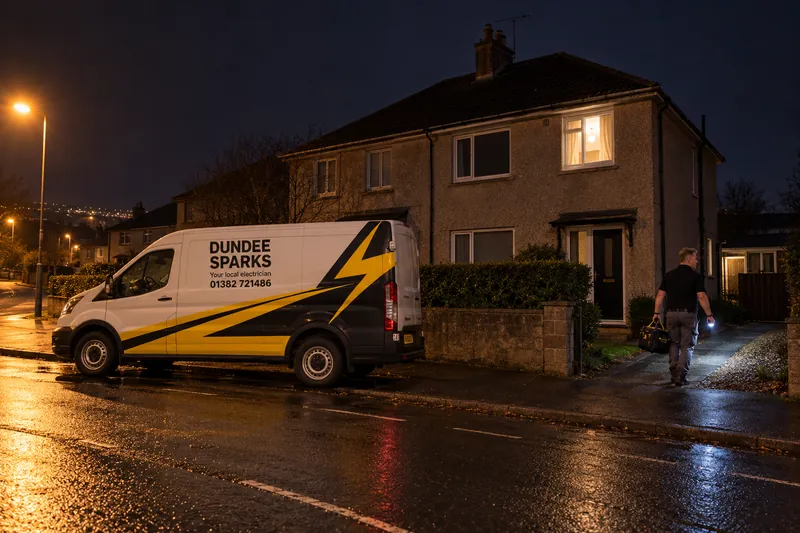
Overnight and Sunday call-outs cost £195 for the first hour
If your electrics fail overnight or on a Sunday, expect to pay £195 for the first hour on site in Dundee. That's £45 more than the evening rate, reflecting the premium electricians charge for working antisocial hours. Overnight rates usually apply from around 10pm to 8am, though each firm sets its own cut-off times, so check before you book.
After the first hour, you'll typically pay £50 for each additional 30 minutes, plus the cost of any parts. If the electrician needs to replace a consumer unit or source specialist components, your bill will climb further.
Bank holidays often fall under the same rate. If the fault isn't dangerous, you'll save money by making the area safe and waiting for standard working hours.

Additional time is billed in 30-minute blocks from £25 to £50
What happens when the job runs past the first hour? You'll pay for additional time in 30-minute blocks, typically costing £25 to £50 each. Where your bill lands in that range depends on when the electrician works.
Daytime extensions cost £25 per block, evening work £45, while overnight and Sunday work pushes rates to £50. If your electrician spends 90 minutes fixing a tripped circuit at 2 a.m., you'll pay the £195 first-hour charge plus one block, bringing your total to £245.
Most electricians round up to the next full block, so 35 extra minutes counts as an hour. Ask how they bill partial blocks before work starts. You'll avoid surprises and can compare quotes across Dundee firms.

Out-of-hours visits require a refundable £50 deposit before dispatch
Most Dundee firms ask you to pay a £50 deposit before they'll send an electrician out after hours. The deposit protects them against wasted call-outs, since a night or weekend trip costs them fuel, time, and premium wages whether or not you're home. You'll usually pay by card through a secure text link, and they won't set off until the payment clears.
The firm deducts your deposit from the final bill once they finish the job. If the electrician can't attend, most companies refund it in full. You'll typically lose it only if you cancel after dispatch or aren't there when they arrive.
Before you pay, confirm the refund terms, ask how long refunds take, and get a written receipt.
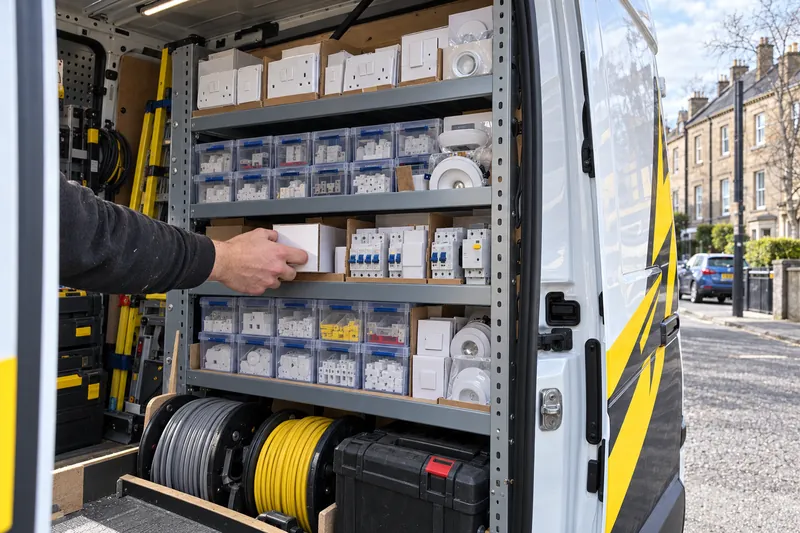
Prices include no VAT, but replacement parts cost extra.
Because many Dundee emergency electricians are sole traders below the £90,000 VAT registration threshold, their call-out and hourly rates don't carry the extra 20% VAT. That saving can be significant: on a £150 emergency bill, you'd avoid paying £30 extra. Always confirm your electrician's VAT status before work begins, since larger firms must add it.
However, the quoted rates cover labour only. You'll pay separately for any replacement parts your electrician fits, such as fuses, circuit breakers, sockets, or consumer units. A new RCD is priced and agreed before fitting, while a full consumer unit replacement can add several hundred pounds. Ask your electrician to itemise parts on the invoice so you can check each cost. Request a parts estimate before they start the repair.